
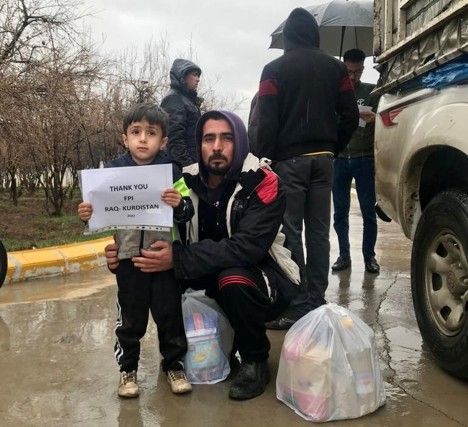
Peace in the Middle East has been discussed, negotiated, and fought over for generations. Less often discussed is what any lasting peace would mean for one of the region's oldest and most vulnerable communities: Middle East Christians. From Damascus to Beirut to Baghdad to Tehran to Erbil, Christian communities that trace their roots to the first century AD are shrinking, watching regional conflicts up close, and asking whether genuine peace, stability, and freedom of worship are possible in their lifetime — or whether emigrating to another country is the only realistic way they can worship in peace.
This article looks at the current state of Syria's post-Assad transition, Lebanon's fragile power-sharing system, Iraq and Iraqi Kurdistan's ongoing tensions and the threat of Iran-backed militias, Iran's underground church, and the broader evangelical movement spreading among converts across the region, to assess what "peace in the Middle East" would actually require for religious minorities to have a future there.
A Community Older Than Islam, Now a Shrinking Minority
Christianity in the Middle East predates Islam by centuries, and Christian communities have been continuously present in the region since the apostolic era of the first century, when Christianity became the predominant faith through a peaceful apostolic movement, until Islam gained dominance over the region, primarily through war and conquest, forced conversions.
By 1900, Christians made up roughly 13–14% of the Middle East and North Africa. Pew Research Center estimates put that figure at about 3% today, down from 3.3% in 2010 — a fraction of what it was even a century ago.[1][2]
The causes are consistent across country studies: emigration driven by war and economic collapse, lower birth rates than Muslim-majority populations, and in several countries, direct religious persecution.[1][2]
Syria After Assad: Pluralism Promised, Violence Persistent
Syria offers the starkest test case of whether a post-conflict transition can protect religious minorities. Since the fall of the Assad regime in December 2024, the country has been governed by a transitional administration under President Ahmed al-Sharaa, a former Islamist insurgent commander who has publicly committed to a pluralistic, non-sectarian Syria and appointed a Christian minister to his cabinet in an attempt to demonstrate this.
The reality on the ground has been mixed. Syrian officials responded quickly and visibly to a deadly June 2025 attack on a Damascus church, and the government has increased security around churches during major Christian holidays. At the same time, the U.S. Commission on International Religious Freedom (USCIRF) documented a significant decline in religious freedom conditions in Syria throughout 2025, finding that transitional authorities "exhibited systematic and ongoing tolerance for egregious violations of religious freedom," including extrajudicial killings targeting Alawites, Druze, and Christians, and recommended that Syria be designated a "Country of Particular Concern."[3][4][5] Separate reporting citing a 2025 USCIRF hearing put Syria's pre-war Christian population at up to 1.5 million, with fewer than 300,000 believed to remain today.[6] Patriarchs representing Syria's major Christian denominations took the unusual step in early 2026 of limiting Easter observances to prayers held inside churches, citing security concerns.
Whether Syria's new government can or will rein in extremist elements operating in its name is, at this point, an open and contested question — how it works out will have much to do with determining whether Syria's remaining Christian communities choose to stay or continue the exodus that began well before Assad's fall.
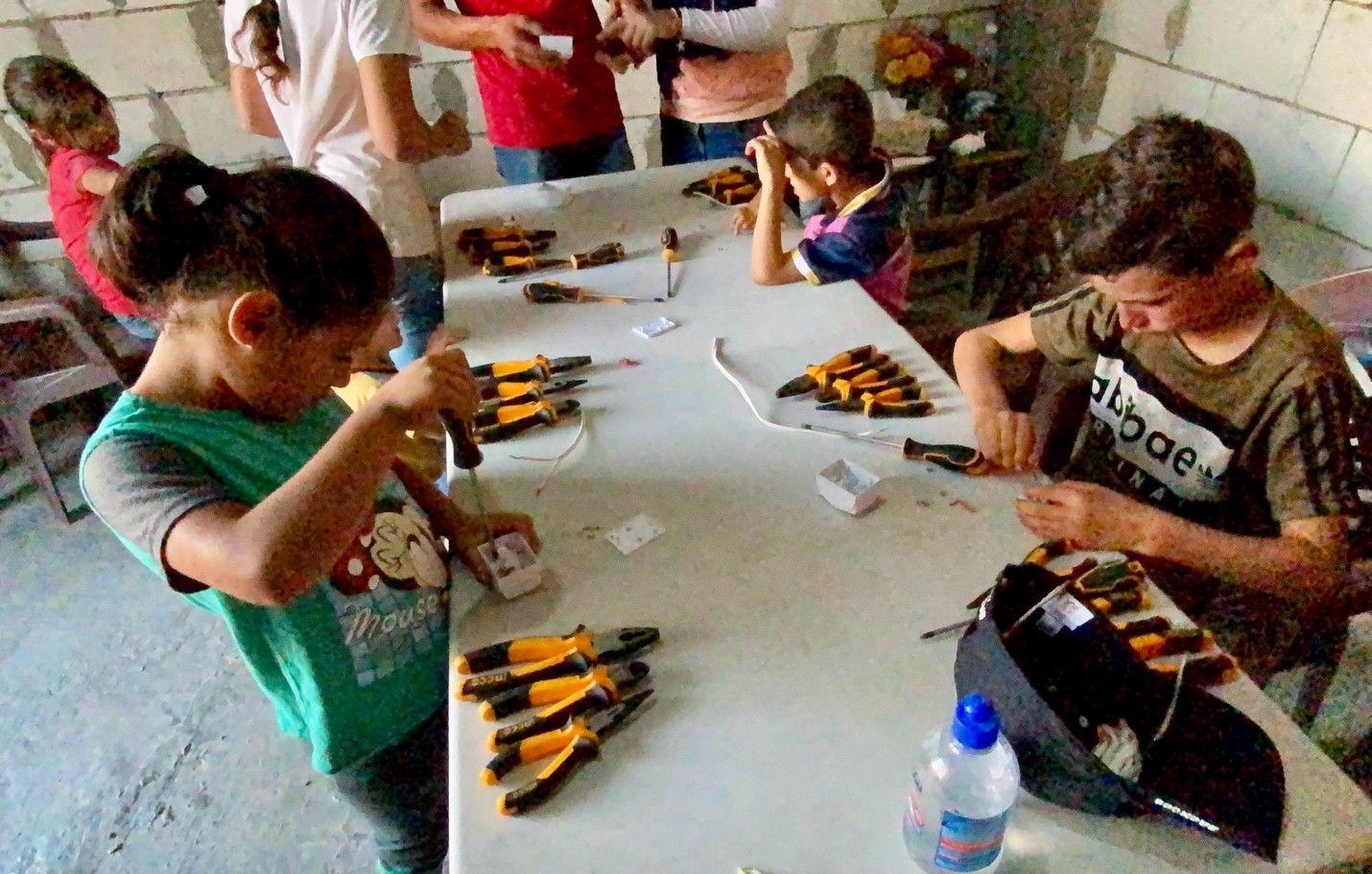
Lebanon: Christians and the Question of Hezbollah's Weapons
Lebanon's political system guarantees Christian representation — the presidency is reserved for a Maronite Christian, currently Joseph Aoun — as part of a decades-old power-sharing arrangement between the country's Christian, Sunni, and Shia communities. But that system has been repeatedly strained by the influence of Hezbollah, an Iran-backed, Shia-led militant group and political party that maintains an armed force independent of the Lebanese state.
Under a 2024 ceasefire agreement and subsequent government decisions, Lebanon has formally committed to bringing all weapons under state control — in effect, disarming Hezbollah. Progress has been slow and contested; Hezbollah has resisted, warning of internal chaos, while renewed cross-border military tension in parts of Lebanon in 2026 has complicated the political calculus for Aoun's government. A poll of 2,000 Lebanese respondents conducted by Information International in late April and early May 2026 found that 89% of Orthodox Christians and 87% of Maronites favored disarming Hezbollah, compared with only about 12% of Shi'ite respondents.[7][8]
For Lebanon's Christian communities, the disarmament question is not abstract. It goes to whether the state, rather than an armed non-state actor, controls decisions over war and peace — a distinction Lebanese Christian leaders and civil society figures have described as central to their own security and to the country's long-term stability.
Iraq and Iraqi Kurdistan: A Recovery That Has Stalled
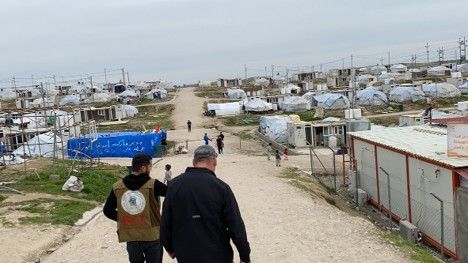
Iraq's Christian population has fallen from an estimated 1.4–1.5 million before the 2003 US-led invasion to a small fraction of that figure today, a collapse driven first by the sectarian violence that followed the invasion and then by the Islamic State's 2014 assault on the Nineveh Plains — the ancestral heartland of Iraq's Chaldean, Assyrian, and Syriac Christian communities, and the same campaign that produced the Yazidi genocide in the neighboring Sinjar region, where ISIS forces massacred, enslaved, and forcibly displaced tens of thousands of Yazidis. Roughly 120,000 people fled overnight, most of them to Erbil and other cities in the semi-autonomous Kurdistan Region, which has functioned for over a decade as the principal safe haven for Iraq's displaced Christians.
More than eleven years later, that displacement has largely become permanent. Church-led reconstruction projects, backed by international Catholic charities, succeeded in rebuilding a majority of homes in several Nineveh Plains towns between 2017 and 2019, and are frequently cited as a rare success story in minority-community reconstruction. Yet recent reporting from the region describes many displaced families still refusing to return, citing the continued presence of rival armed factions and the absence of firm security guarantees in areas outside direct Kurdistan Regional Government control. Christian political parties have repeatedly petitioned Iraqi authorities to halt land-distribution measures in the region on these grounds, most recently in mid-2026. Church leaders warn that the pattern, combined with weak or slow-moving legal recourse, is quietly finishing what ISIS's 2014 invasion started, leaving some towns that were majority-Christian a generation ago now majority-Muslim.
Christian community organizations in Iraq and Kurdistan have more recently pushed initiatives focused on legal protection of Christian-owned property, stronger political representation in Iraq's institutions, and economic investment intended to give young Christian families a reason to stay rather than emigrate. Iraqi Kurdistan itself, with its comparatively stronger security environment, continues to be described by Christian leaders as the region's most viable refuge — but a refuge is not the same as a restored homeland, and Chaldean Catholic leaders continue to appeal publicly for the international community not to let Iraq's Christians be forgotten.
Iran: An Underground Church Under an Islamist State
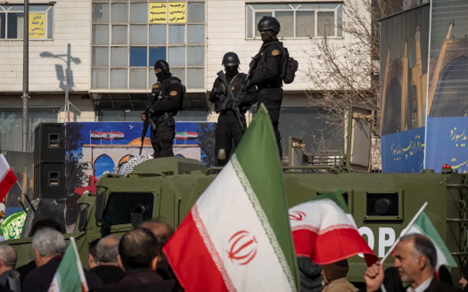
Iran sits apart from the rest of the region in one key respect: its small Christian population is not primarily threatened by war or sectarian militias, but by the policies of the Iranian state itself. Armenian and Assyrian Christians, recognized as historic religious minorities, are permitted to worship, but under heavy restrictions — government monitoring of churches, bans on using the Persian language in services, and rules intended to prevent Muslim-background Iranians from attending. Historic congregations have in some cases been evicted from their own church properties, including a Tehran Presbyterian church whose residents were ordered out in mid-2026.
The far greater risk falls on converts — Muslim-background Iranians who have become Christians, who receive no legal protection and are frequently treated by authorities as a national-security threat. Rights monitors and legal researchers report Iranian courts issuing lengthy prison sentences against house-church members on charges such as "propaganda against the Islamic Republic," alongside raids, interrogations, and, in some documented cases, threats of execution against Christian converts linked to political activism. Despite this, researchers and advocacy groups who track the underground church describe it as continuing to grow, sustained largely through small, discreet house-church gatherings rather than any prospect of open religious freedom. For Iran's Christians, "peace" is less a question of ceasefires than of whether the state itself will ever tolerate religious pluralism — a question tied closely to Iran's own unresolved and often violent domestic political trajectory.

The Evangelical Church Movement: A Different Kind of Growth
Running alongside — and sometimes in tension with — the story of historic churches in decline is a separate and less visible trend: the growth of evangelical and Protestant Christianity across the Middle East, much of it made up of converts from Muslim backgrounds. Estimates of the total number of Muslim-background believers in the Middle East vary enormously depending on methodology, with figures ranging from roughly 1 million to 2 million, and researchers caution that verified figures are hard to come by, since many converts keep their faith hidden and worship in underground churches to avoid social and legal repercussions.
Iran is frequently cited by missions researchers as home to one of the fastest-growing evangelical movements anywhere in the world, driven almost entirely by underground house churches rather than the country's small, legally recognized Armenian and Assyrian congregations. Elsewhere, Egypt has a longer-established evangelical presence, rooted in missionary work dating back over a century, while newer evangelical and charismatic congregations have taken root in smaller numbers in Iraq, Jordan, and the Gulf states, often meeting discreetly and relying heavily on satellite television, apps, and social media to reach seekers who cannot risk visiting a physical church.
Governments in the region have generally treated the movement with suspicion, and conversion from Islam remains illegal or heavily restricted in much of the Middle East, and converts — more than any other Christian group in the region — face the most severe individual legal and physical risk, up to and including imprisonment, violence, and execution, as documented in Iran and reported in more limited form elsewhere. In that sense, the evangelical movement's growth is less a sign that the region is becoming safer for Christians and more evidence that faith is spreading despite the absence of the legal protections that would make it safe to practice openly.
What Would Real Peace Require?
Framed around the experience of Christian and other religious minorities, "peace in the Middle East" turns out to mean something more specific than the absence of active war. Based on the patterns across Syria, Lebanon, Iraq and Iraqi Kurdistan, and Iran, several conditions recur:
- Enforceable ceasefires, not just declared ones. Announced ceasefires do not by themselves stop violence or resolve the underlying political disputes that produce it.
- A state that alone controls armed forces. Wherever armed groups operate outside government control — Hezbollah in Lebanon, extremist factions in Syria, rival militias in the Nineveh Plains — minority communities report the greatest insecurity.
- Rule of law and equal citizenship, applied to all and protected by the state, not verbal assurances from individual leaders — minority communities across the region say experience has taught them to be wary of promises that carry no valid government backing.
- Religious freedom as a constitutional right, protected and enforced by the state. Iran shows that even where no active war is underway, the absence of legal protection for converts and unrecognized congregations produces its own form of persistent insecurity — a pattern that also shapes the risks facing the region's fast-growing evangelical and convert communities more broadly.
- Economic stability, since emigration is driven as much by collapsed currencies and lost livelihoods as by direct violence.
- International attention and engagement that continues beyond the news cycle, given how often minority communities describe being an afterthought in ceasefire negotiations and reconstruction plans built primarily around the region's major political and military actors.
- A willingness and desire to forgive and reconcile. Enormous violence has been inflicted on the region's communities over decades of war, occupation, and persecution, with Christians, Yazidis, and other minorities among those who have suffered disproportionately through massacres, forced displacement, and the destruction of their homes and holy sites. Lasting peace will require offenders to acknowledge and apologize for that violence and victims to be willing to forgive, since reconciliation — not merely a ceasefire — is what makes genuine and durable peace possible.
No Simple Answer
There is no simple answer to whether peace in the Middle East is achievable, and reasonable observers disagree sharply about the region's trajectory — some point to Syria's political transition and Lebanon's disarmament talks as evidence of a region moving, however unevenly, toward stability; others see fragile arrangements that could unravel at any point, or, in Iran's case, a government with little incentive to change course at all. What the experience of the region's Christian communities makes clear is that the test of any peace process will not just be whether major powers stop fighting, but whether the region's smallest and most vulnerable communities — in Damascus and the Nineveh Plains, Beirut and Tehran — can worship freely and live safely in the land where their faith began.
Frontier Partners International
Frontier Partners International is actively working throughout the Middle East to help displaced Christians, Yazidis, and other persecuted minorities, providing food, shelter, and advocacy for human rights and religious freedom — while fostering the work of forgiveness and reconciliation among communities torn apart by conflict. Its mission is centered on serving "the least and the last" — communities in crisis, impoverished, oppressed, and persecuted, often because of their faith, national origin, race, or tribe — with a vision of walking alongside them from emergency relief through to secure, self-sustaining communities and, ultimately, greater religious freedom and civil society in their homelands.
To learn more or get involved, visit www.FrontierPartners.org.
Sources:
[1] The Media Line, "Middle East and North Africa 2025: Christian Communities Grow Slowly As Share of Population Falls," Dec. 26, 2025. [2] Pew Research Center, "Religion in the Middle East and North Africa" / "How the Global Religious Landscape Changed From 2010 to 2020," June 9, 2025. [3] USCIRF, 2026 Annual Report — Syria Country Update, May 2026. [4] SyriacPress, "USCIRF 2026 Annual Report — Syria: Political Transition, Militant Integration, and Renewed Extremist Threats Leave Religious Minorities Facing Uncertain Future," Mar. 13, 2026. [5] Syrians for Truth and Justice, "Syria: USCIRF Annual Report Recommends Designating Syria as a 'Country of Particular Concern' (CPC)," Mar. 18, 2026. [6] International Christian Concern, "Syria 2025 In Review: A Year of Violence and Uncertainty," Jan. 15, 2026. [7] The Jerusalem Post, "Majority of Lebanese civilians want peace agreement, Hezbollah disarmed," May 20, 2026. [8] Algemeiner, "Lebanese People Broadly Support Hezbollah's Disarmament, New Poll Finds," May 19, 2026. [9] L'Orient Today, "Negotiations, normalization, arms monopoly: Polls reveal a fragmented Lebanon," May 19, 2026. [10] The Acts 2:11 Project, "Our New Research on Historic Scope of Conversion Phenomenon in the MENA region," International Journal of Frontier Missiology.
Share Now: